Golf Course Irrigation: Keeping the Water Supply Behind the Course Reliable
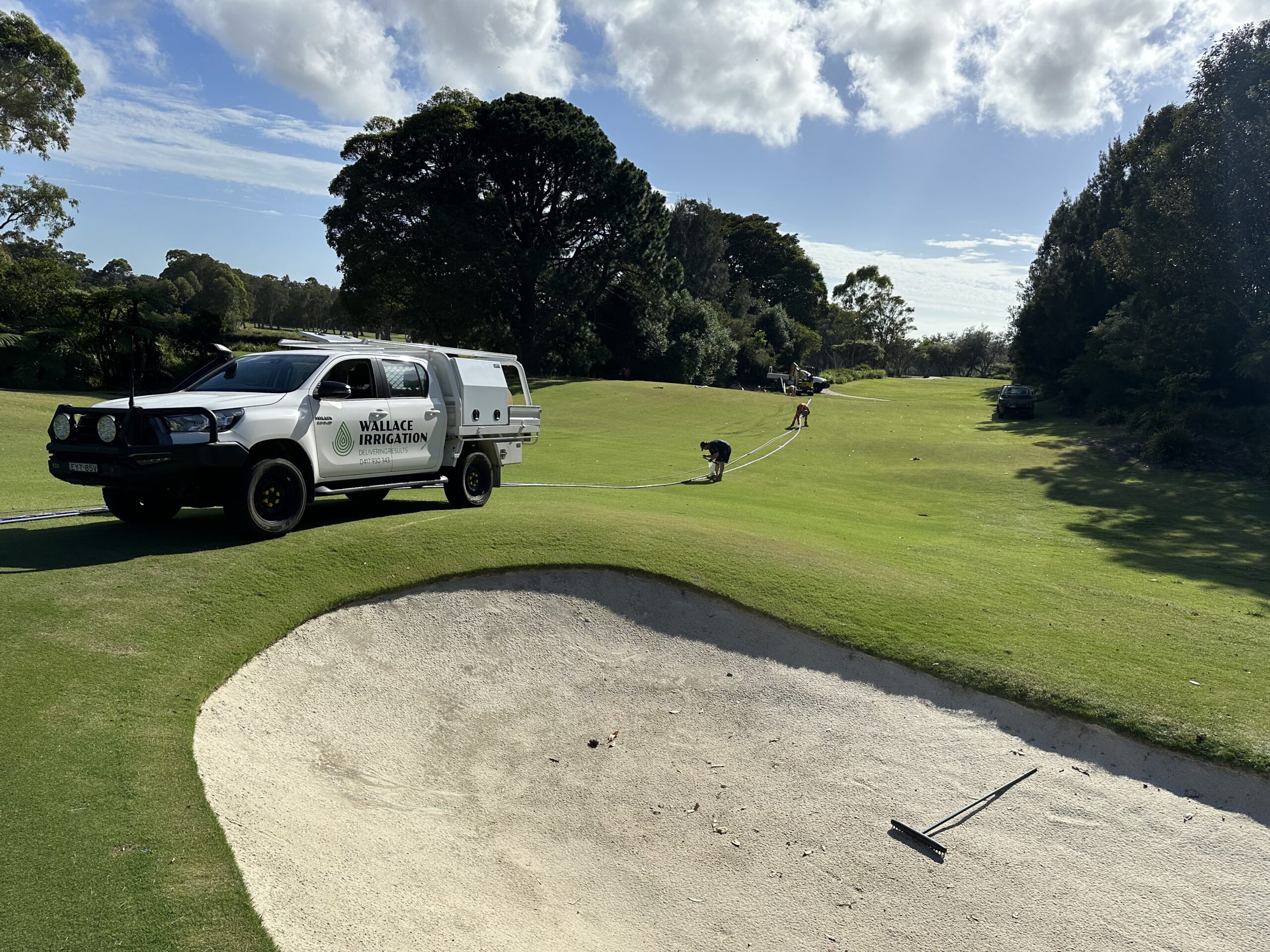
Golf course irrigation gets judged on what members see: green fairways, healthy greens and sprinklers that come on when they should. All of that depends on the part nobody sees, which is the water supply behind the system. When a bore loses yield, a pump starts to struggle or a main springs a leak, the whole course feels it. Wallace Irrigation works with golf clubs on that supply side, from bore pumps and bore testing to water meters and ongoing maintenance.
What sits behind a golf course irrigation system
On most courses the irrigation system splits into two halves. The front end is what the greenkeeping team manages day to day: the controller, the valves and the sprinklers on each hole. The supply side feeds it: the water source, the pumps that lift and pressurise the water, the mains that carry it around the course, and the meter that records what is used.
Courses draw on bores, dams, recycled water or a mix of them. Where a bore is part of the supply, its condition sets a hard limit on how much water the course can put out in a heatwave. Our irrigation maintenance services for golf clubs are built around keeping that supply side running.
Where the water supply usually lets a course down
Bore yield and water quality
A bore that kept up in spring can fall short in a hot, dry summer, just when demand peaks. A pumping test measures how much water the bore can deliver over a sustained period and how far the water level draws down, so the real capacity is known before the course depends on it. Wallace Irrigation runs pump testing to the NSW governing standard, with a preliminary test, a constant discharge test and a recovery test. Our step-by-step guide shows what a professional bore test involves.
Water quality matters as well. Iron and sediment foul filters and sprinkler nozzles, and the mineral content of the water affects what the turf will tolerate. Bore testing looks at water quality as well as system efficiency, which is how these problems get caught early.
Pumps working at the edge of their duty
Courses change over time. New tees, rebuilt greens and extra zones all add demand, and a pump that was right for the original layout can end up running flat out for longer every night. That shortens its life and leaves no margin when something else goes wrong. Falling pressure at the far end of the course, longer watering cycles and rising power bills are all signs the pump is working too hard.
Leaks and unmeasured water
A slow leak on a buried main can run for weeks before it shows as a wet patch. A meter on the supply, read regularly or connected to a logger, shows water use that does not match the watering program. Where the course takes water under a licence, the meter also has to meet the NSW metering regulations, and James Wallace is a certified water meter installer under those rules.
Planning maintenance around the playing calendar
The best time to work on a course’s water supply is when the course needs it least. Pulling a bore pump, testing a bore or replacing a valve during a summer heatwave puts the turf at risk and leaves the team watering by hand. Scheduling that work in the cooler months, and testing the bore and pump before summer, means problems turn up while there is still time to fix them.
Wallace Irrigation’s maintenance programs for golf clubs include routine inspections, preventative care and prompt repairs. Our maintenance schedule for a commercial bore pump sets out which checks belong where, from daily monitoring through to annual servicing.
Working on a course that stays open
Most clubs cannot close for maintenance, so the work happens around members and the greenkeeping team. That means planning access so vehicles stay off greens and soft ground, fencing off open excavations, and finishing within the agreed window. Wallace Irrigation prepares a Job Safety and Environmental Analysis (JSEA) and Safe Work Method Statement (SWMS) for site work, and keeps work sites discreet and secure. Our guide to JSEA and SWMS documents on irrigation projects explains what each one covers.
To talk about the bore, pumps or meters behind your course, call James Wallace on 0417 930 343 or contact the Wallace Irrigation team.