Magnetic Flow Meters on Bores and Irrigation Mains: How They Work and When to Use One
A magnetic flow meter, also called a magflow or electromagnetic flow meter, measures water moving through a pipe without putting anything in its path. There is no impeller to wear, nothing for sand to jam, and almost no pressure lost across the meter. That is why it is a common choice on bores and irrigation mains where the water is not perfectly clean and the flows are large. This guide covers how one works, where it suits, how it compares with a mechanical meter, and what the installation needs to get right.
How a magnetic flow meter works
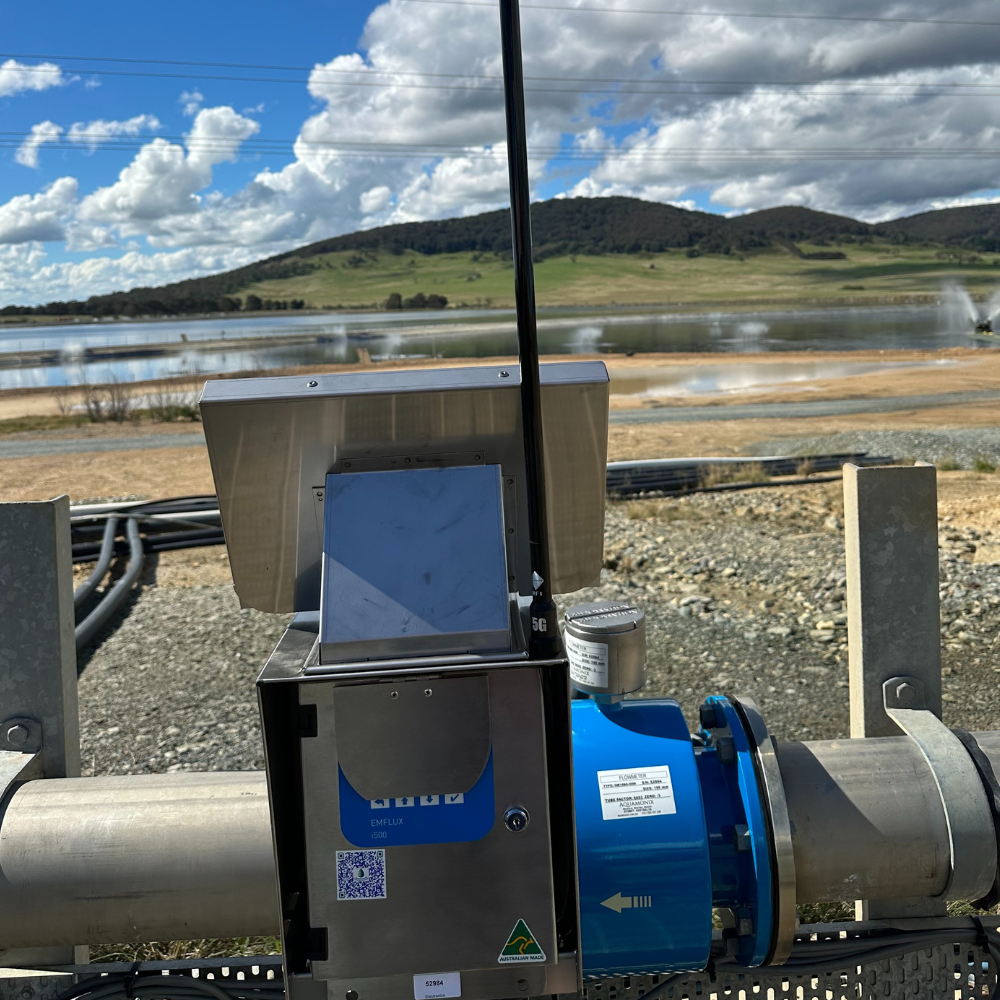
The meter is a short section of pipe with a coil on each side and two small electrodes set into the wall. The coils create a magnetic field across the pipe. Water conducts electricity, so as it moves through that field it generates a tiny voltage, and the faster it moves, the higher that voltage. The electrodes pick up the signal and the transmitter turns it into a flow rate and a running total.
Two things follow from that design. The water has to be conductive, which raw water from bores, dams and rivers is. And because the tube is open from end to end, the meter does not restrict flow or catch debris the way a meter with moving parts can.
Where a magnetic meter suits a bore or irrigation system
Wallace Irrigation carries out water meter installations on commercial sites, from vineyards and golf clubs to councils and mine sites. Three conditions on those sites tend to favour a magnetic meter.
Water that carries sand, iron or silt
Bore water often carries fine sand, and many bores carry iron. In a mechanical meter those wear the impeller and bearings or build up on them, and the readings drift long before anyone notices. A magnetic meter has no moving parts in the flow, so it keeps reading true on water that would wear a mechanical meter out.
Large pipes and changing flows
Magnetic meters are made for large mains and read accurately across a wide range of flows, from a single zone running to the whole system at full pump output. That matters on irrigation mains, where demand can change several times in one watering cycle.
Sites that need data, not just a dial
The transmitter produces an electronic signal that can feed a data logger or telemetry unit. That gives live flow readings and a usage history without anyone driving out to read a dial. It is also the starting point for using digital meters to find leaks in irrigation networks, because a leak shows up as flow that should not be there.
Magnetic or mechanical: which meter fits?
A mechanical meter still has a place. It costs less, needs no power, and on a small line carrying clean water it will do the job for years. A magnetic meter costs more and needs power at the meter, either from mains supply or from a solar panel and battery on a remote bore.
The choice usually comes down to four questions. How clean is the water? How big is the pipe and how much does the flow vary? Is there power at the site, or room for a solar panel? And do the readings need to be sent somewhere automatically?
If the meter records water taken under a licence, compliance comes before any of those. Both the meter and the person installing it have to satisfy the NSW non-urban water metering rules, and James Wallace is a certified water meter installer under those regulations.
What a good installation needs
A magnetic meter is only as accurate as its installation. These are the points that matter most:
- The pipe must run full at all times. Air passing the electrodes gives false readings, so the meter goes where air cannot collect and never at a high point in the line.
- It needs a straight run of pipe before and after it, as set out in the manufacturer’s instructions, clear of bends, valves and the turbulence straight off a pump.
- It must be earthed correctly, which takes extra care on plastic pipe.
- The transmitter needs to be easy to read and protected from sun, flooding, stock and vehicles.
Most of that is decided before the meter arrives on site. Our guide to preparing a site for a certified water meter installation covers the pipework, access and paperwork in more detail.
To have a magnetic flow meter or any other water meter selected and installed on your bore or irrigation main, call James Wallace on 0417 930 343 or send an enquiry through our contact page.